Is the Housing Market Crashing in 2026? Why the Market Is Cooling, Not Collapsing
If you’ve spent any time watching the news, scrolling social media, or talking with friends about real estate, you’ve probably heard the question:
“Is the housing market about to crash?”
It’s a fair question.
Mortgage rates remain higher than they were during the pandemic boom. Inventory is increasing in many markets. Homes are taking longer to sell than they did in 2021. Buyers are negotiating again.
To some people, those changes feel like warning signs.
But here’s what the data actually tells us:
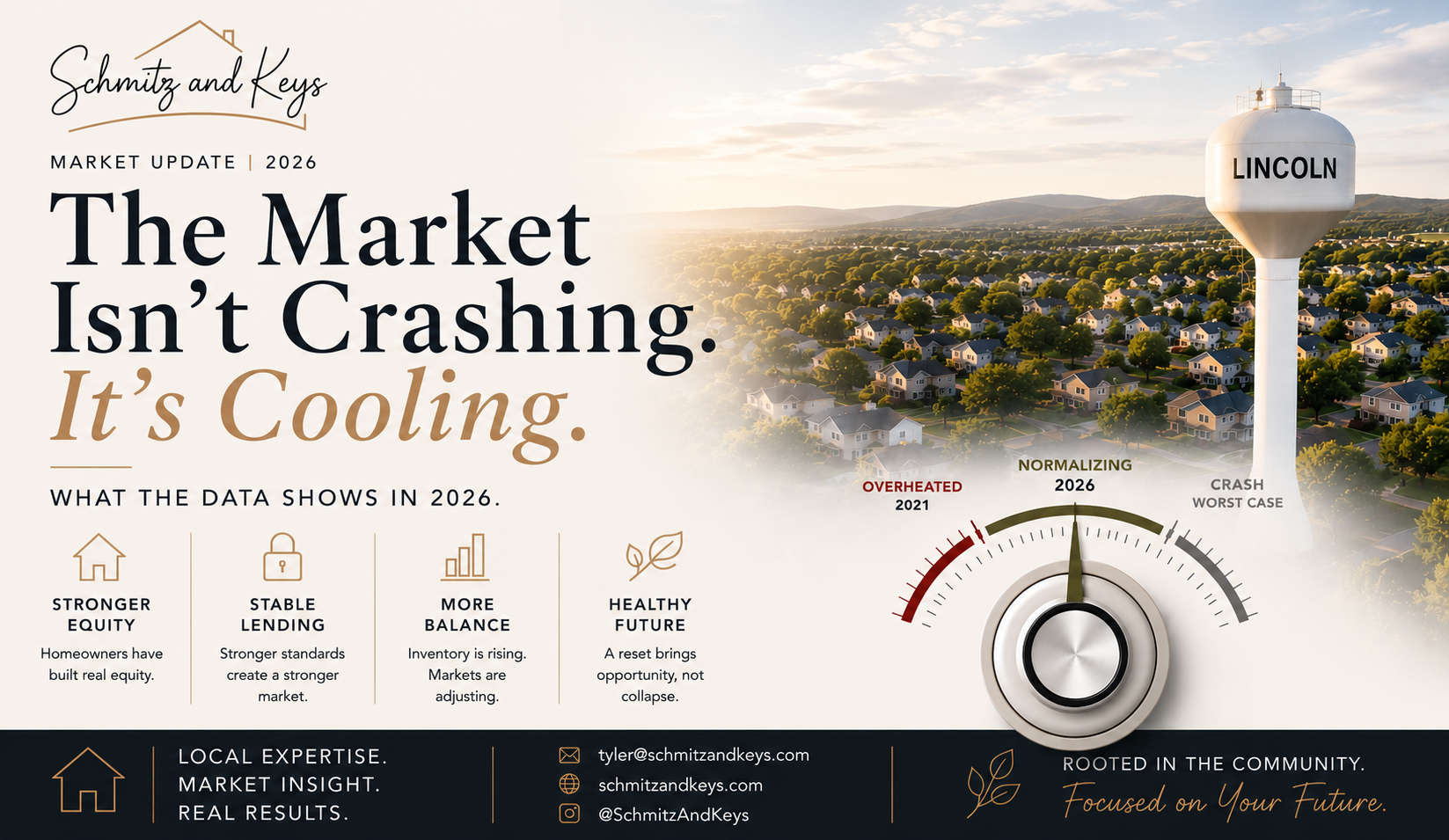
The housing market isn’t crashing. It’s cooling.
There’s a big difference.
At SchmitzAndKeys, we believe buyers and sellers deserve facts—not fear. Let’s take a closer look at what’s really happening in today’s housing market and why 2026 looks very different from the housing crash of 2008.
Why People Think the Market Is Crashing
Many homeowners remember the Great Recession.
Between 2007 and 2009, home values declined dramatically across much of the country. Foreclosures surged. Lending froze. Millions of homeowners found themselves underwater on their mortgages.
So when people see headlines about:
- Rising inventory
- Price reductions
- Longer days on market
- Higher mortgage rates
they naturally wonder if history is repeating itself.
The reality is that today’s market conditions are fundamentally different.
The 2021 Housing Market Was Overheated
To understand where we are today, we first need to understand where we’ve been.
During the pandemic housing boom, the market experienced conditions that were anything but normal.
Buyers routinely:
- Waived contingencies
- Offered tens of thousands above asking price
- Competed against dozens of offers
- Purchased homes sight unseen
- Accepted homes with minimal inspections
In many neighborhoods, homes sold within days.
Some sold within hours.
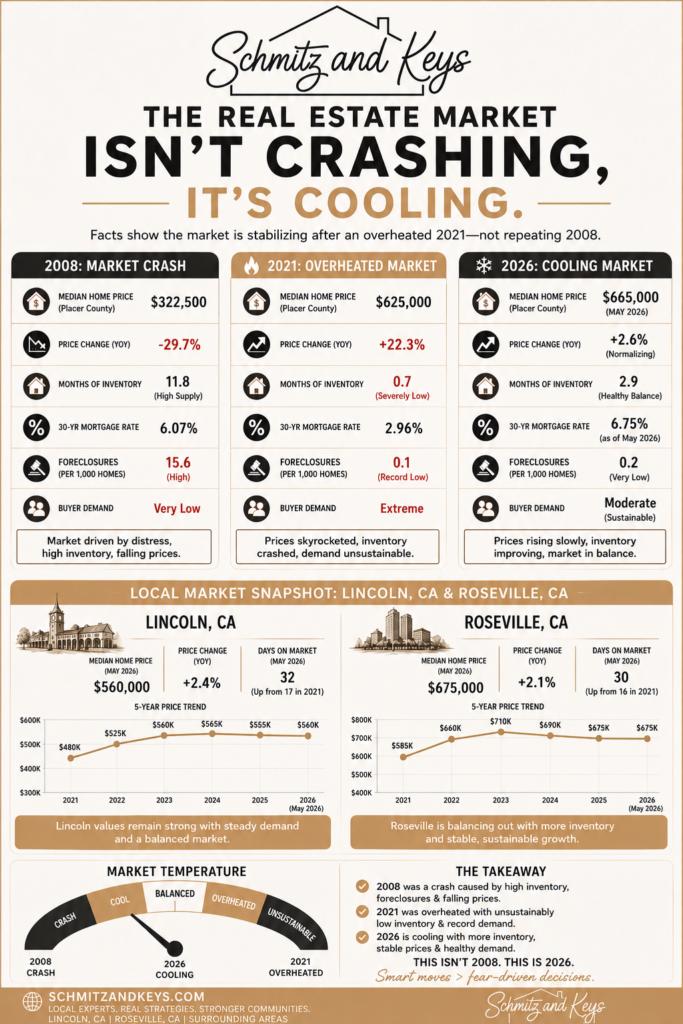
Interest rates below 3% created unprecedented affordability and demand, while housing inventory reached historic lows.
The result?
A market that was moving faster than historical norms.
What We’re Seeing in 2026
Today’s market looks very different.
Instead of an overheated market, we’re seeing something healthier:
More Inventory
Buyers have more choices than they did during the frenzy of 2021 and 2022.
More inventory means:
- Less pressure
- More opportunities
- Better decision-making
- Fewer bidding wars
That’s not a crash.
That’s balance returning to the market.
Longer Days on Market
Homes aren’t selling in a weekend anymore.
Sellers may need:
- Better pricing strategies
- Professional marketing
- Strong presentation
Again, this isn’t unusual.
Historically, homes have always taken time to sell.
The pandemic years were the exception—not the rule.
Increased Negotiation
Buyers are once again negotiating:
- Closing costs
- Repairs
- Credits
- Contingencies
This creates a healthier transaction environment for everyone involved.
Why 2026 Is Nothing Like 2008
The biggest misconception in real estate today is comparing the current market to 2008.
Let’s compare the two.
2008: The Crisis
The housing collapse was fueled by:
- Risky lending practices
- Little to no income verification
- Adjustable-rate mortgages
- Speculative buying
- Excessive leverage
Many borrowers simply couldn’t afford their loans.
When home values declined, foreclosures exploded.
Banks tightened lending standards and the entire system came under pressure.
2026: The Reality
Today’s homeowners are in a much stronger position.
Most homeowners have:
- Significant equity
- Fixed-rate mortgages
- Historically low interest rates locked in
- Stronger financial qualifications
Lending standards today remain among the strictest we’ve seen in decades.
That creates a much more stable housing environment.
The Equity Difference
One of the biggest reasons a crash is unlikely is homeowner equity.
Most homeowners have accumulated substantial equity over the past several years.
Even if home values flatten or experience modest declines, many owners still have a large financial cushion.
In 2008, millions of homeowners owed more than their homes were worth.
Today, most homeowners have the opposite problem—they have more equity than ever before.
That’s a critical distinction.
What This Means for Buyers
For buyers, today’s market may actually present opportunities.
Instead of competing with 20 offers, many buyers can now:
- Take more time evaluating properties
- Conduct inspections
- Negotiate repairs
- Ask for credits
- Explore financing options
The market has become less emotional and more strategic.
That’s often where the best opportunities exist.
What This Means for Sellers
For sellers, success now requires a different approach.
The days of simply putting a sign in the yard and receiving multiple offers overnight are largely behind us.
Today’s sellers need:
- Accurate pricing
- Professional photography
- Strong online marketing
- Proper home preparation
- Local market expertise
Homes that are priced correctly and marketed effectively continue to sell.
What We’re Seeing in Lincoln, Roseville, Rocklin, and Placer County
Across Placer County, we’re seeing many of the same trends occurring nationally.
Buyers have more options.
Inventory has increased.
Negotiations are becoming more common.
Yet demand remains strong because Northern California continues to attract buyers looking for:
- Excellent schools
- Growing communities
- New construction opportunities
- Outdoor recreation
- Strong long-term value
Communities like Lincoln, Roseville, Rocklin, Loomis, and Granite Bay remain highly desirable places to live.
A Market Reset Is Healthy
Markets aren’t supposed to move straight up forever.
Every healthy market experiences periods of adjustment.
What we’re seeing today is not a collapse.
It’s a reset.
A recalibration.
A return to more sustainable conditions.
That creates opportunities for both buyers and sellers who understand how to navigate the current environment.
Final Thoughts
The housing market of 2026 is not the housing market of 2008.
Inventory is increasing.
The market is slowing.
Negotiations are returning.
But none of those factors automatically signal a crash.
Instead, they point toward a market that is becoming more balanced and sustainable.
For buyers, that means more opportunities.
For sellers, it means strategy matters more than ever.
If you’re considering buying or selling in Lincoln, Roseville, Rocklin, Loomis, or anywhere in Placer County, understanding local market conditions is critical.
At SchmitzAndKeys, we’re committed to helping our clients make informed decisions based on real data—not headlines.
Because when you understand the market, you can move forward with confidence.
Ready to discuss your real estate goals?
Contact SchmitzAndKeys today and let’s create a strategy that works for today’s market.